









Key Takeaways
- The Situation: DDR5 RAM prices have surged 200–400% in late 2025 due to global AI demand.
- The Pivot: Custom builders like Paradox Customs now sell high-end rigs with a “$0 RAM” option.
- The Strategy: “BYO Memory” allows gamers to avoid retailer markups or reuse existing sticks.
- The Outlook: Shortages are expected to persist until late 2027.
If you have tried to configure a high-end gaming PC in late 2025, you have likely run into a wall of sticker shock. It isn’t the GPU or the CPU driving the price spike this time—it’s the memory.
In the midst of the most severe DRAM shortage in years, the custom PC market is evolving. With standard 64GB DDR5 kits now retailing for $500–$650 (more than a PlayStation 5 console), builders are getting creative. The latest trend? Selling fully built gaming rigs without the RAM.
Custom builder Paradox Customs recently made headlines by offering a “No RAM” option on their high-end configurations. But is this just a desperate move to keep sales moving, or a genius workaround for savvy consumers? Here is everything you need to know about the “RAM-less” PC trend.
The 2025 DDR5 Crisis: Why Prices Are Exploding
To understand why builders are stripping memory out of their systems, you have to look at the supply chain. Since mid-2025, DDR5 prices have exploded by 200–400%.
The primary culprit is the “AI Super Cycle.” Semiconductor fabrication plants (fabs) that usually produce consumer DDR5 memory have pivoted aggressively to manufacture enterprise-grade memory for AI data centers. With limited global manufacturing capacity, consumer supply has choked, driving prices through the roof.
Analysts currently predict that new fabrication plants won’t bring significant relief until late 2027 or 2028. Until then, the $600+ memory kit might be the new normal.
How the “No RAM” Option Works
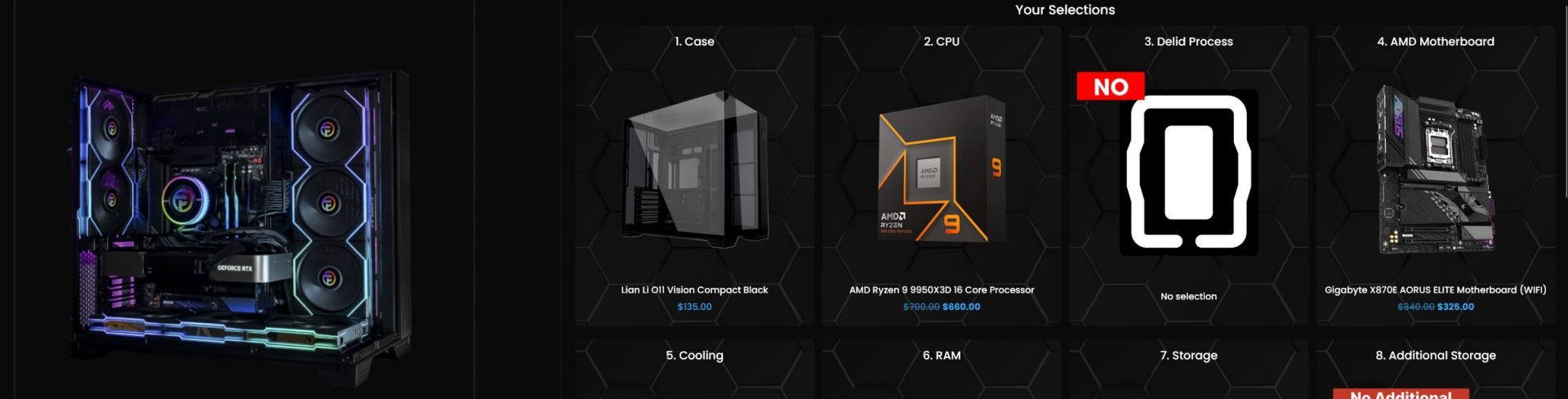
Paradox Customs, known for building rigs for high-profile streamers like Kai Cenat, introduced this option specifically to combat Q4 shortages. On premium configurations, such as their Lian Li O11 Vision builds, users can now select a “$0 RAM” option in the configurator.
The concept is simple: You buy the fully assembled rig – CPU, GPU, Motherboard, Cooling, and Storage – and when it arrives, you pop in your own memory sticks. This allows the builder to ship the unit without charging the customer an inflated premium for scarce DDR5 stock.
Pros and Cons: Should You Buy a PC Without RAM?
Is unbundling your memory a smart financial move? Let’s break down the advantages and risks.
The Pros
- Cost Control: You avoid the builder’s markup on an already expensive component.
- Deal Hunting: You can camp out on sites like Newegg or eBay to snag a used or on-sale kit at a lower price than the system builder can offer.
- Reuse Hardware: If you are upgrading from a previous DDR5 build, you can simply transfer your old sticks (recycling hardware is increasingly popular).
The Cons
- No “Plug and Play”: The PC will not boot out of the box. You must be comfortable opening the case and installing the RAM yourself.
- Compatibility Risks: If you buy RAM that isn’t on your motherboard’s QVL (Qualified Vendor List), you may face stability issues or failure to boot.
- Warranty Complications: If the system crashes, diagnosing whether it is the prebuilt PC or your own RAM can be difficult.
Buyer’s Guide: What to Watch For
If you decide to go the “RAM-less” route to save money, keep these three tips in mind to ensure your rig runs smoothly:
- Check the Motherboard Model: Before you buy the PC, note the exact motherboard model. Go to the manufacturer’s website and check the “Memory Support List.”
- Match the Speed: Ensure the RAM you buy matches the CPU’s “sweet spot.” For most late-2025 CPUs, this is likely between 6000MHz and 7200MHz.
- Buy in Pairs: Always buy a dual-channel kit (two sticks) rather than a single stick to maximize performance.
The Verdict
With motherboard sales reportedly down 40–50% and competitors like CyberPowerPC forced to hike prices, the “RAM-less” adaptation is likely here to stay. It is a smart workaround for stockpilers and enthusiasts, even if it adds an extra step for the average consumer.